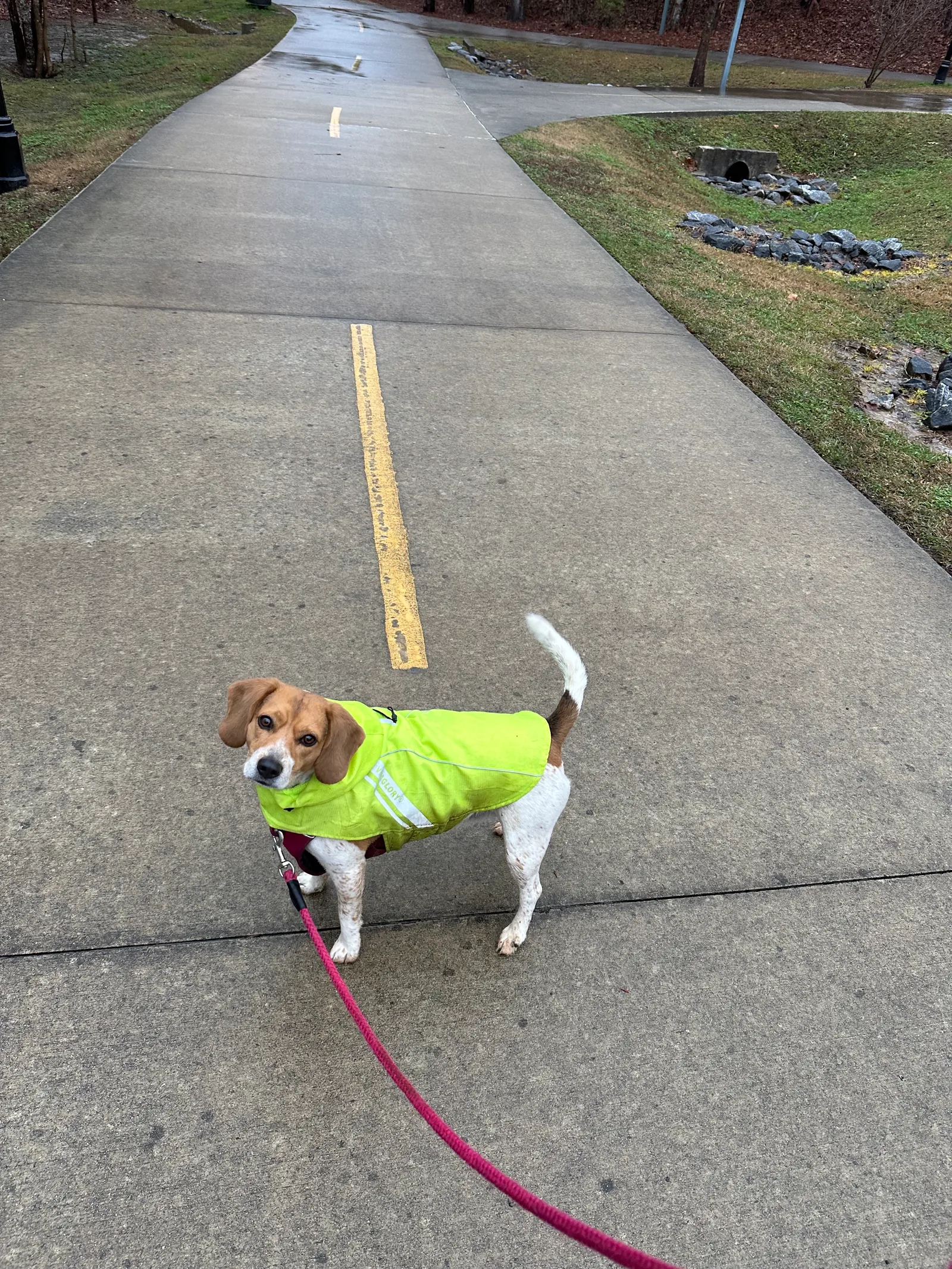

Start with a morning sniffing job
Before breakfast or the first laptop meeting, hide 6-10 pieces of kibble in a towel, snuffle mat, or easy corner of one room. Keep the first round visible enough that your beagle wins quickly. The whole job takes about 3 minutes, which is shorter than the complaint it prevents.
That early search gives the day a job before the house starts producing reasons for complaint. Skyler treats morning kibble work like official mail. It arrives, she inspects it, and no one needs to involve the chair legs.
Put food work before the restless window
Look for the hour your dog usually audits the room: after work, before dinner, after guests leave, or when rain has edited the schedule.
Place a towel search, puzzle feeder, or cardboard box investigation 10 minutes before that window. Timing matters. Pay the nose before it starts submitting invoices to the baseboards.
Keep training reps short enough to survive
Use two or three easy cues your beagle already knows: touch, sit, find it, go to mat, or look. Cue, reward, release. Repeat for 3-5 minutes.
This is a reset, not obedience theater. The point is to give the brain a tiny assignment and a clean finish. A beagle who gets paid for checking in has less need to hold a press conference at the window.
Give the routine a landing spot
After sniffing and training, send the energy somewhere quiet. Use a mat, crate, dog bed, or familiar blanket with a chew, lick mat, or stuffed toy if those are safe for your dog.
The landing spot works best when it follows the job often enough to become familiar. Search, think, settle. Skyler understands this sequence as employment followed by a modest executive lounge.
Adjust for workdays, guests, rain, and shared walls
On a workday, run a search before the call and save the chew for the call. Before visitors arrive, do the sniffing job before the doorbell turns into a civic matter. On rainy days, make the outdoor trip short and let the indoor search carry more of the load.
Shared-wall homes need the same routine with cleaner timing. If hallway noise usually starts the speech, give the beagle a job before the hallway gets a vote.
Know when routine needs backup
Routine helps ordinary boredom, missed sniffing work, and predictable restless periods. Panic when alone, sudden behavior changes, pain signs, repeated destruction, or frantic barking need a different level of help.
Keep a small log for a week: time, trigger, activity, food used, and what happened afterward. The log will tell you whether the routine is working, or whether Skyler has filed a larger complaint with the household.
Questions humans ask after the howling stops briefly.
What is the best daily routine for a beagle at home?
Start with a short sniffing job, add food-based problem solving before the restless window, use a few easy training reps, then give your beagle a calm landing spot.
How long should a beagle home routine take?
Start with 10-20 minutes. A short repeatable routine usually works better than one huge activity session that leaves the dog wired and the human resentful.
Should I walk my beagle before or after nose work?
Either can work. Many beagles do well with a sniff-focused walk plus a small indoor search afterward, especially during busy workdays or bad weather.
What if my beagle is still restless after the routine?
Make the routine easier to repeat and check the pattern for triggers. If restlessness is sudden, severe, frantic, or paired with pain signs, ask a vet or qualified trainer.